

Sunday began with coffee and a rather significant misunderstanding about New York geography.
We had plans to meet our dear friends Kim and Kim for a tour of the catacombs at St. Patrick’s Cathedral.
Naturally, I assumed this meant the enormous, world-famous cathedral on Fifth Avenue.
You know, the one everyone knows.
So there we were, leisurely enjoying our morning coffee, taking our time, and congratulating ourselves on a relaxed Sunday morning when we discovered that we actually needed to be in SoHo.
Apparently, New York has another St. Patrick’s Cathedral.
And that one is considerably farther downtown.
Personally, I blame the Catholics.
They have thousands of saints to choose from. Thousands! And somehow, they decided New York needed two St. Patrick’s Cathedrals.
And I’m saying this as a Patrick myself.
I’m all for honoring our namesake, but surely we don’t need to monopolize the cathedral market.
Would it have killed them to pick another saint?
St. Anthony? St. Francis? St. Somebody Else?
I’m beginning to think St. Patrick had a very aggressive public relations department.
Meanwhile, two perfectly respectable churches share essentially the same name, and innocent tourists like us are left wandering around Manhattan wondering why our catacombs tour isn’t on the schedule.
Apparently, divine intervention does not extend to Google Maps.
Nothing quite like a little geographical incompetence to get the blood pumping before you’ve finished your caffeine.
Wrong Cathedral, Right Adventure
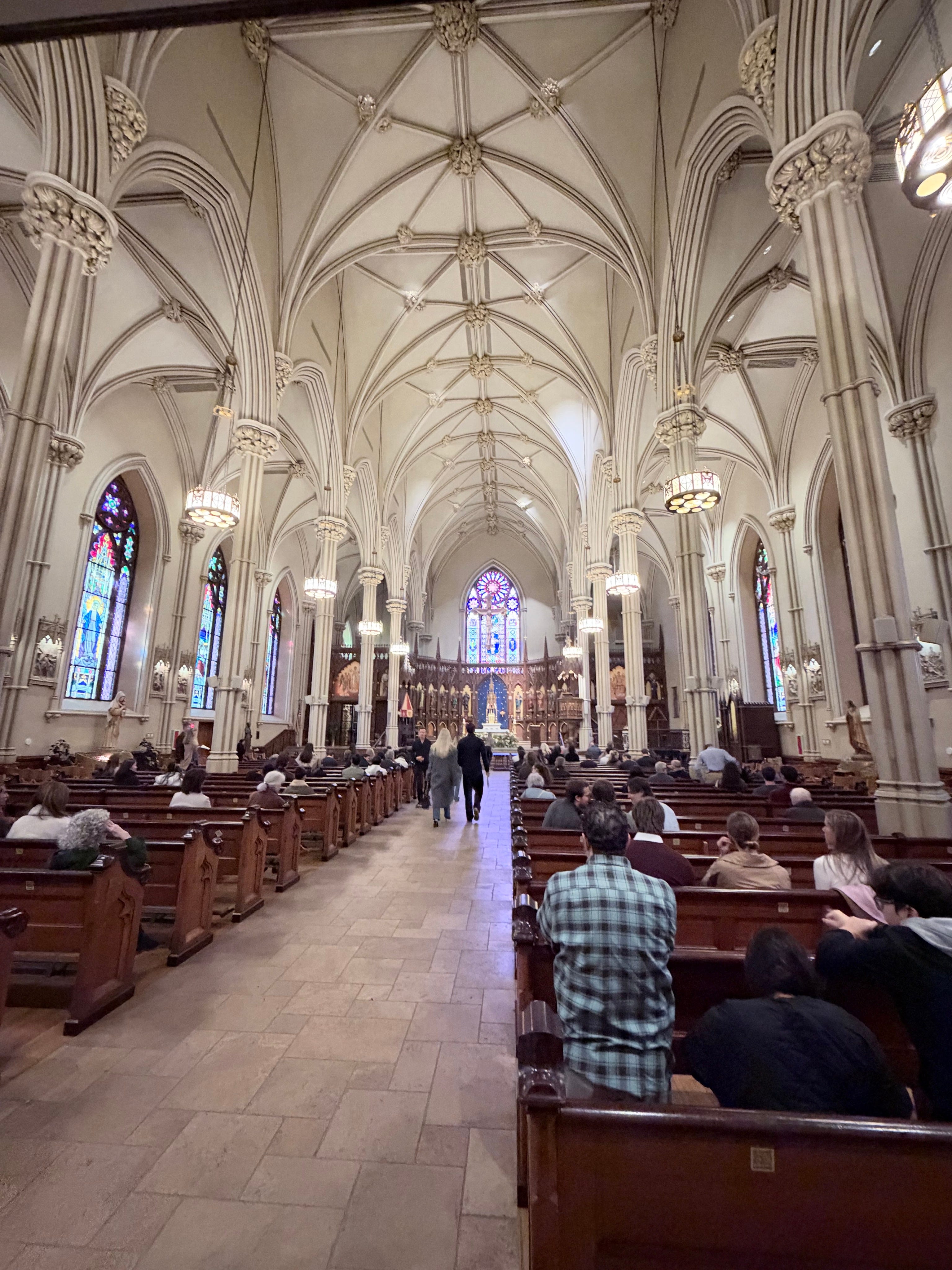
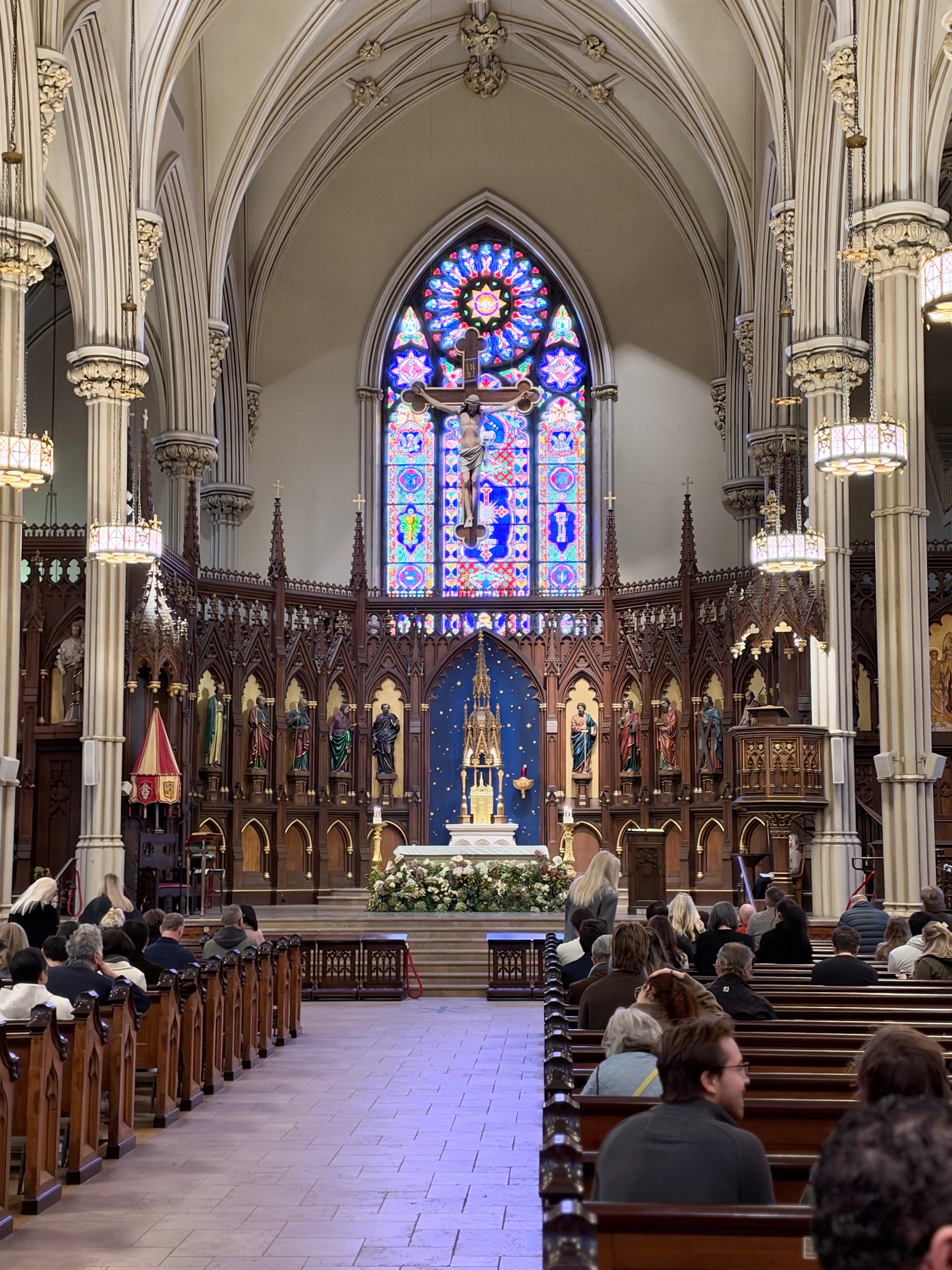
We managed to get ourselves downtown and met up with Kim and Kim at the Basilica of St. Patrick’s Old Cathedral.
And what a discovery it turned out to be.
The original St. Patrick’s Cathedral dates back to 1815, long before its much more famous successor on Fifth Avenue. Tucked into the neighborhood around Little Italy, it’s a beautiful old church with an extraordinary amount of history.
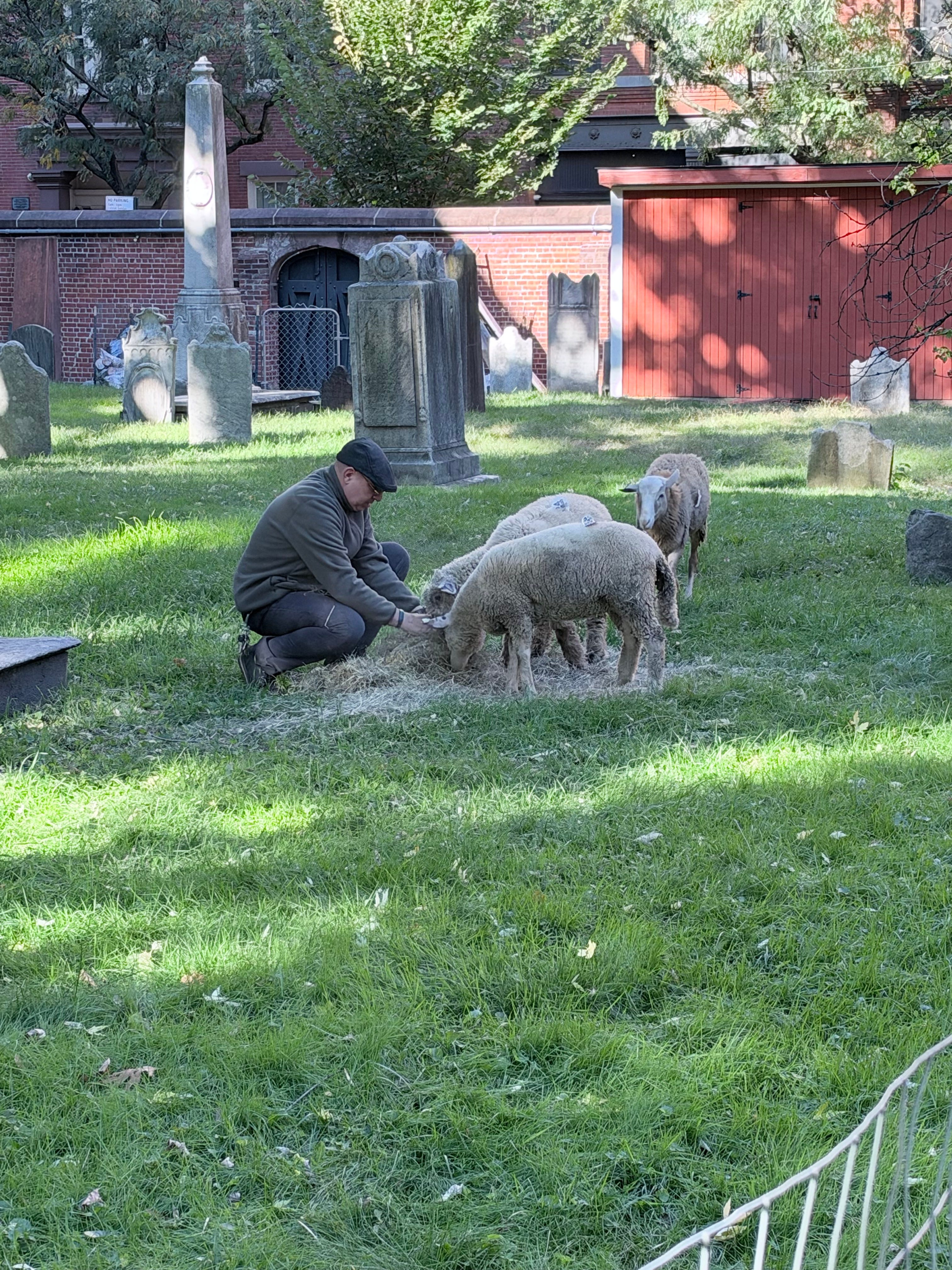
New York has this wonderful habit of hiding remarkable things in plain sight.
You can be walking down a busy street, surrounded by restaurants, shops, delivery trucks, and people arguing into their phones, and suddenly find yourself standing in front of a building that has been there for more than two centuries.
Inside, the church is beautiful.
And beneath it?
The catacombs.
Now, anyone who has been following our adventures might be noticing a theme.
Friday night, we were wandering through Green-Wood Cemetery in the dark.
Sunday morning, we were voluntarily descending beneath an old cathedral to explore burial vaults.
Apparently, Matt and I have developed a rather unusual approach to sightseeing.
Some people visit New York for the shopping.
We seem to be developing an interest in the deceased.
The tour was fascinating. We learned about the history of the church, the surrounding neighborhood, and the generations of New Yorkers buried on the property. We heard that upwards of 30,000 people had been laid to rest in the church’s burial grounds over the years.
Think about that.
Thirty thousand people.
An entire community of lives, stories, families, and history, all connected to this one little corner of Manhattan.
I had imagined the catacombs would be rather creepy.
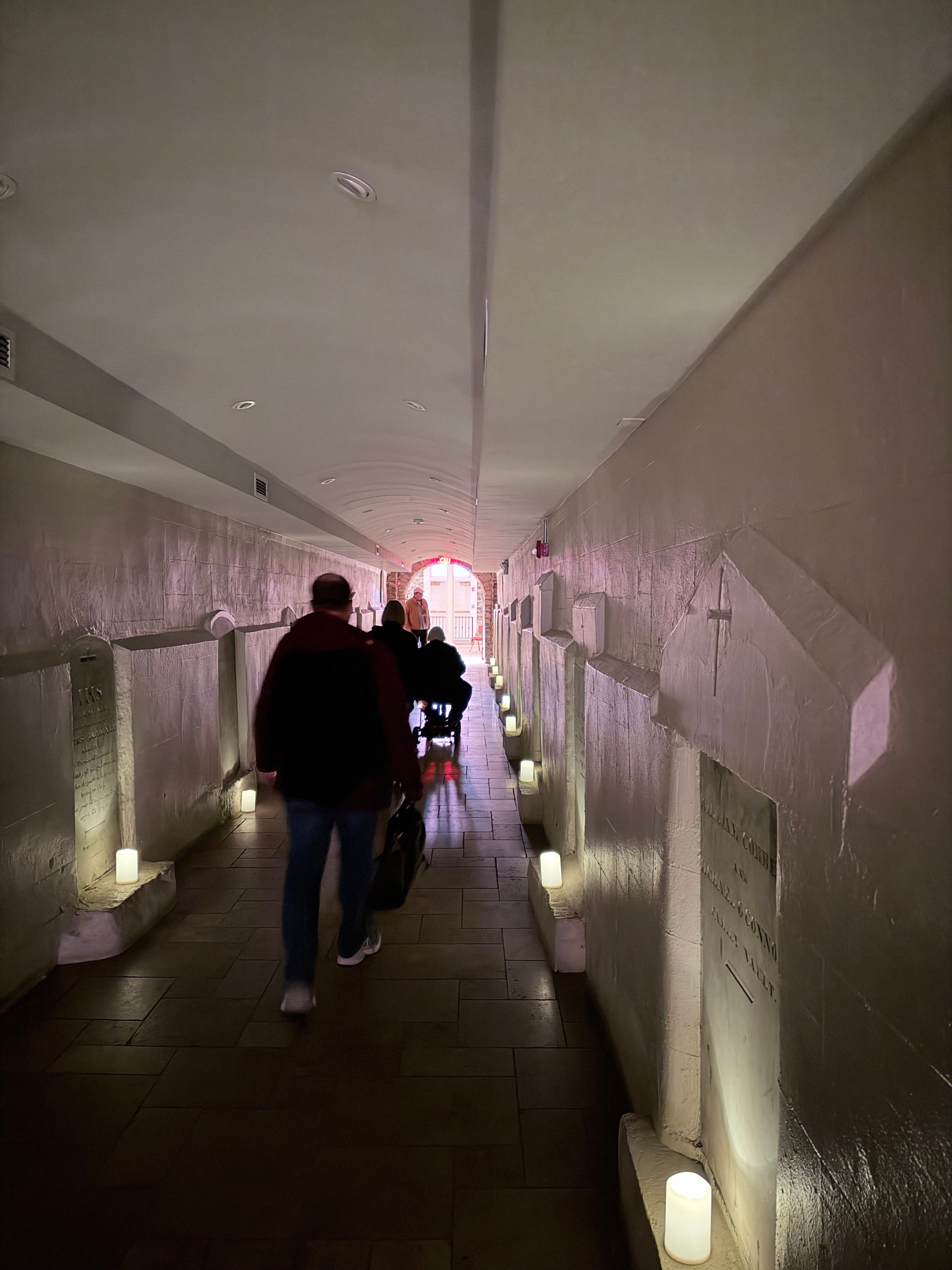
Dark passageways. Ancient tombs. Perhaps the occasional restless spirit making an appearance.
Instead, they reminded me of an old-fashioned U-Haul storage facility.
Only made of bricks.
And the tenants have considerably longer leases.
There were rows of burial vaults, brick walls, and a surprisingly practical arrangement for what is, after all, a rather permanent storage situation.
Not particularly frightening.
But absolutely fascinating.
What made the experience memorable wasn’t the possibility of encountering a ghost. It was realizing how much history was hidden beneath the streets we’d been walking.
Two hundred years of New York life, tucked away underground.
Even if parts of it looked suspiciously like self-storage.
Ukrainian Food, Washington Square, and a Very Important Souvenir
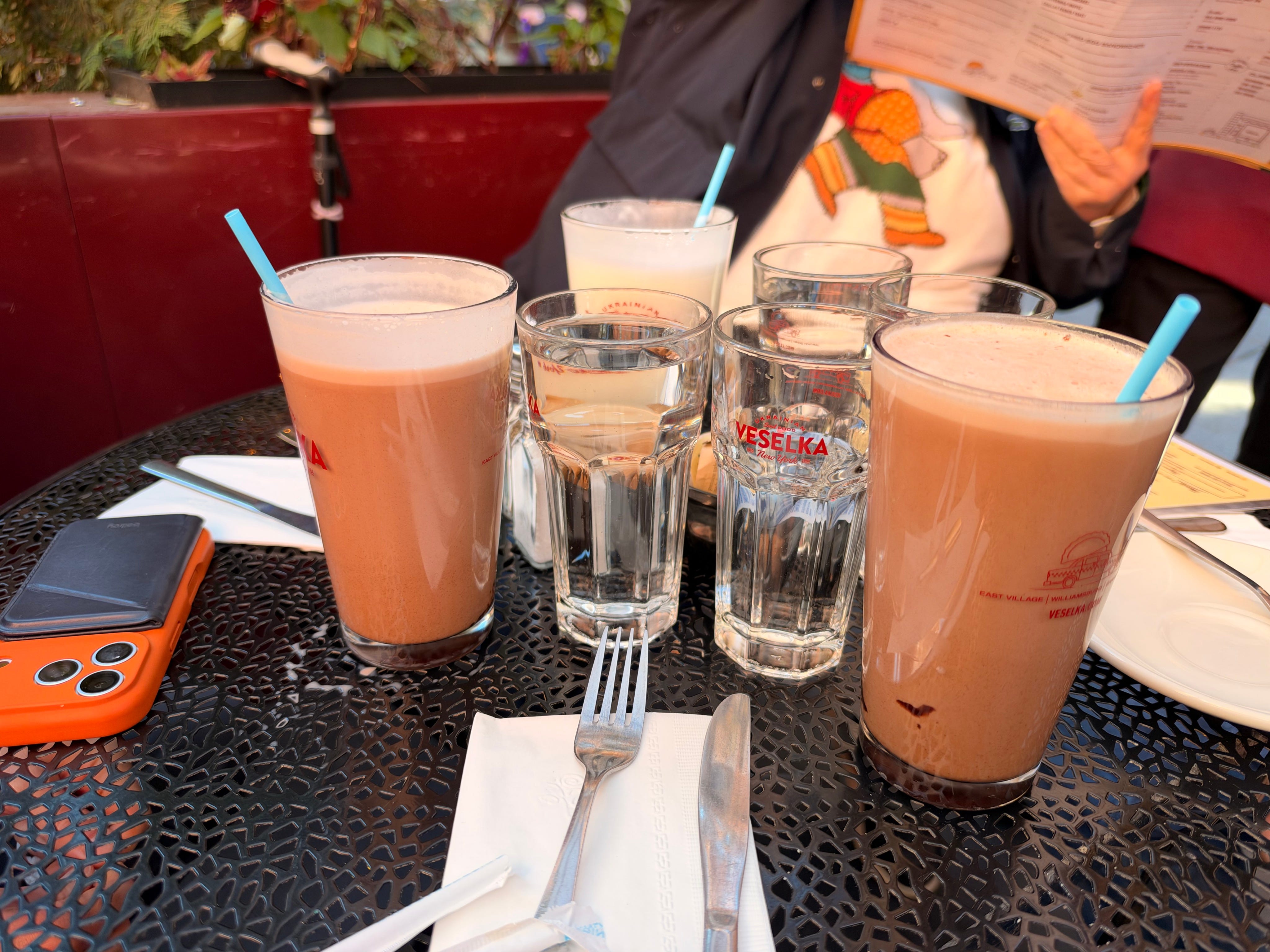
After our underground adventure, the four of us headed to Veselka, the legendary Ukrainian restaurant in the East Village.
This was a place we’d been wanting to try, and it fit perfectly into our day of exploring old New York neighborhoods.
One of the things I love about this city is how quickly the atmosphere changes from one neighborhood to another.
A few blocks can take you from grand churches and historic streets into an entirely different world of restaurants, shops, apartment buildings, and people going about their Sunday.
After eating, we continued toward Washington Square Park.
And what a wonderful place to spend a little time.
The grand marble arch stands at one end, framing one of the city’s most recognizable views, while the park itself seems to contain every possible variety of New Yorker.
Street performers. Musicians. Students. Families. Tourists. People playing chess. People watching other people.
And plenty of people doing things that probably make perfect sense to them but require a little explanation for the rest of us.
It was wonderfully chaotic.
And then, amid all that wonderful New York eccentricity, I spotted something I’d been searching for since Friday.
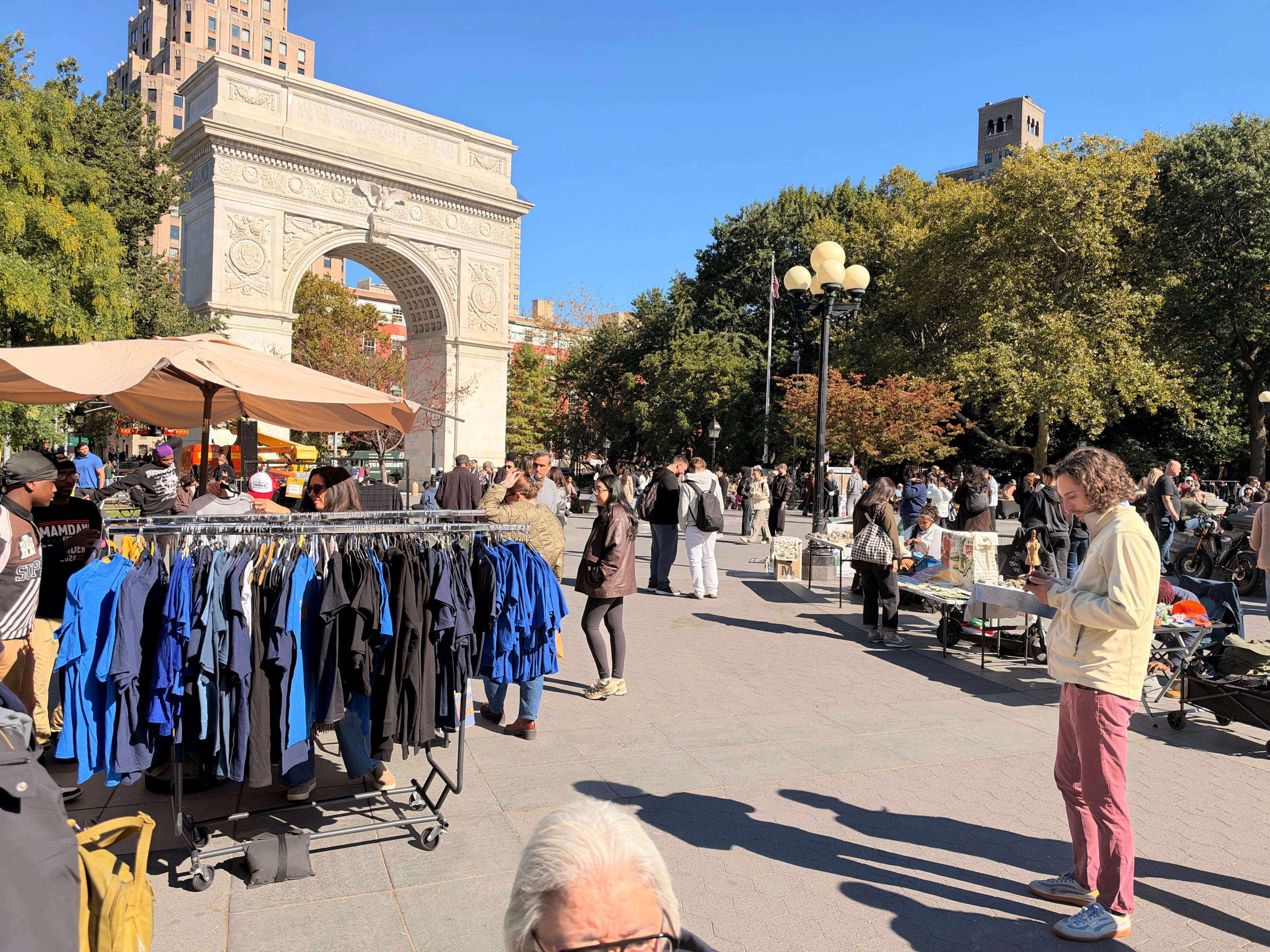
A Mamdani T-shirt!
You may recall my disappointment when my earlier search around City Hall failed to produce one.
Well, apparently I’d been looking in the wrong place.
Forget City Hall. Forget the official tourist shops.
Washington Square Park was where the merchandise was hiding.
Mission accomplished.
The Statue of Liberty? Done.
Brooklyn Bridge? Done.
Mamdani T-shirt? Finally!
Some tourists come home with an I ❤️ NY shirt.
I apparently have more specific political souvenir requirements.
Honestly, between the catacombs and the T-shirt, Sunday was already shaping up to be a rather successful day.
And we still had plenty of Manhattan left to explore.
Stonewall and the Streets That Changed History
Our wandering eventually brought us to the Stonewall Inn.
Of all the places we’ve visited this week, this one carries a particularly personal significance.
Standing outside the Stonewall Inn, where the 1969 uprising became a defining moment in the modern LGBTQ rights movement, I found myself thinking about how much has changed.
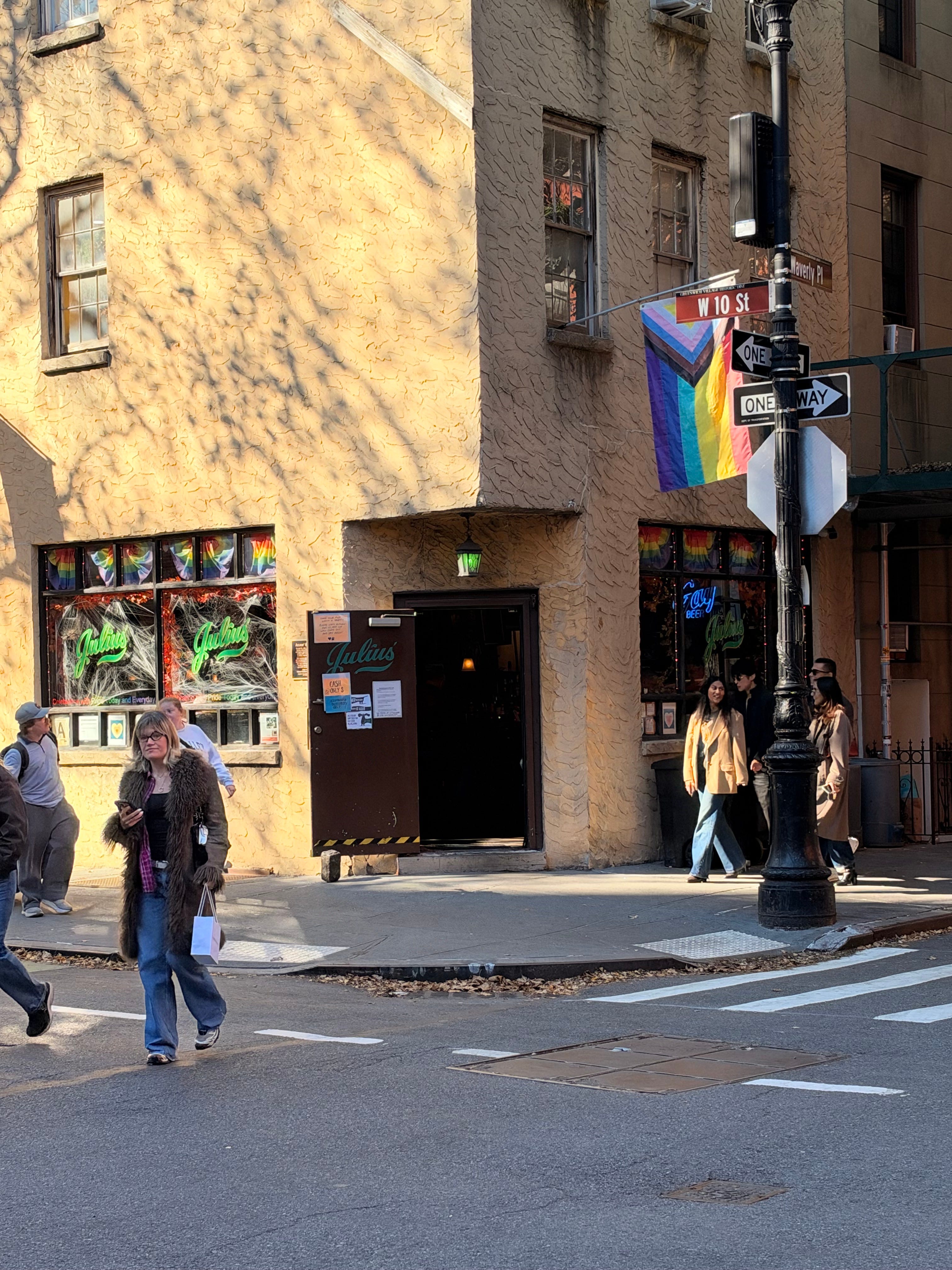
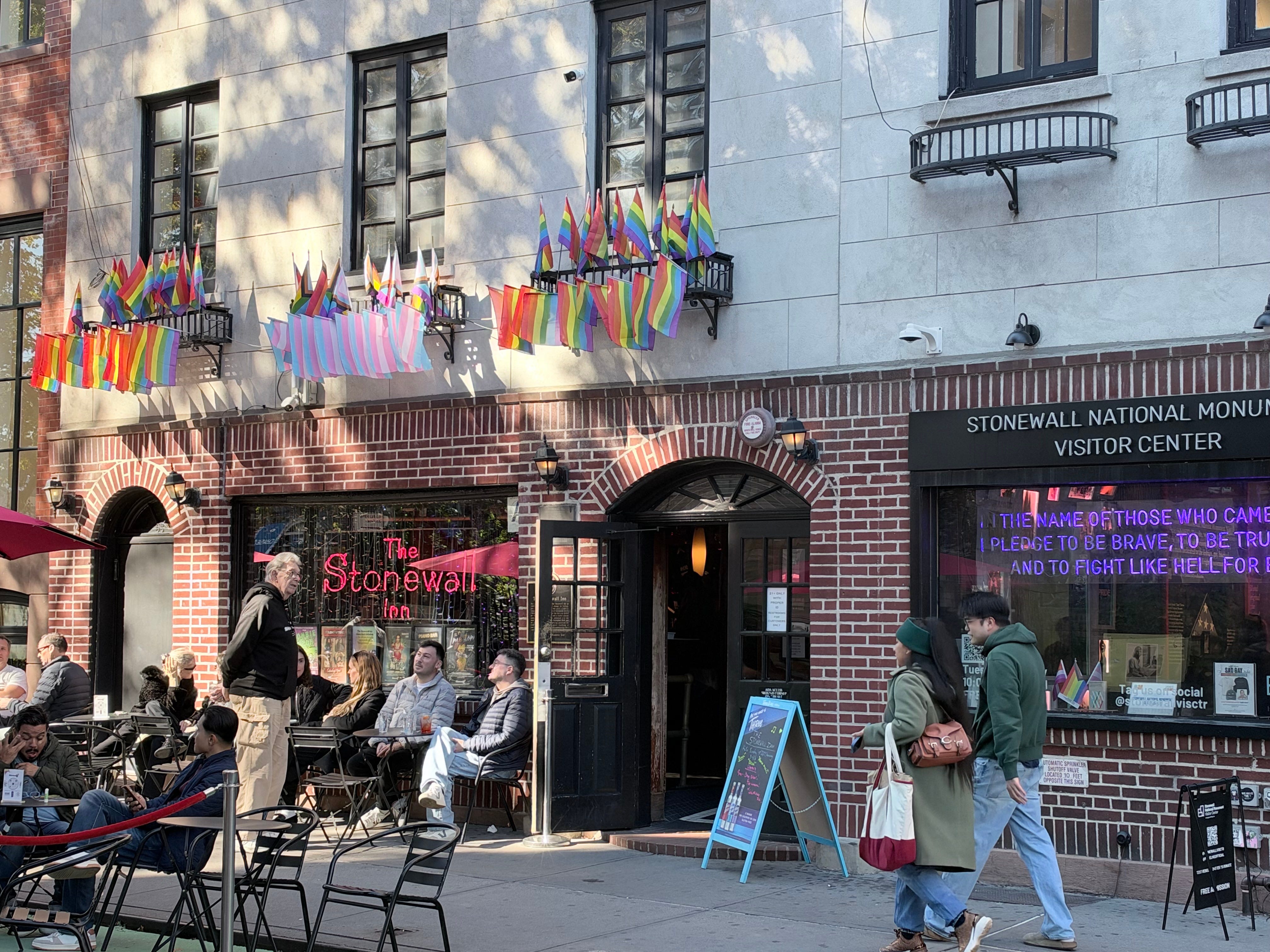
And how much of that change came because ordinary people decided they’d had enough.
People who were tired of hiding.
Tired of being harassed.
Tired of being told that who they were was something to be ashamed of.
It’s easy, especially as the years pass, to forget that the freedoms we enjoy today weren’t simply handed to us.
People fought for them.
Some paid an enormous price.
And here we were, two married gay couples, wandering through Greenwich Village together on a Sunday afternoon.
Something that might once have seemed unimaginable.
History has a way of becoming very personal when you realize you’re living in the world that other people helped make possible.
Stonewall was also where we parted ways with Kim and Kim for the afternoon.
They had tickets to see Billy Crystal perform, while Matt and I still had a considerable amount of Manhattan we wanted to explore.
We said our goodbyes, knowing we’d all be meeting again later.
And off we went.
Brownstones, Winding Streets, and a Little
Friends
Nostalgia
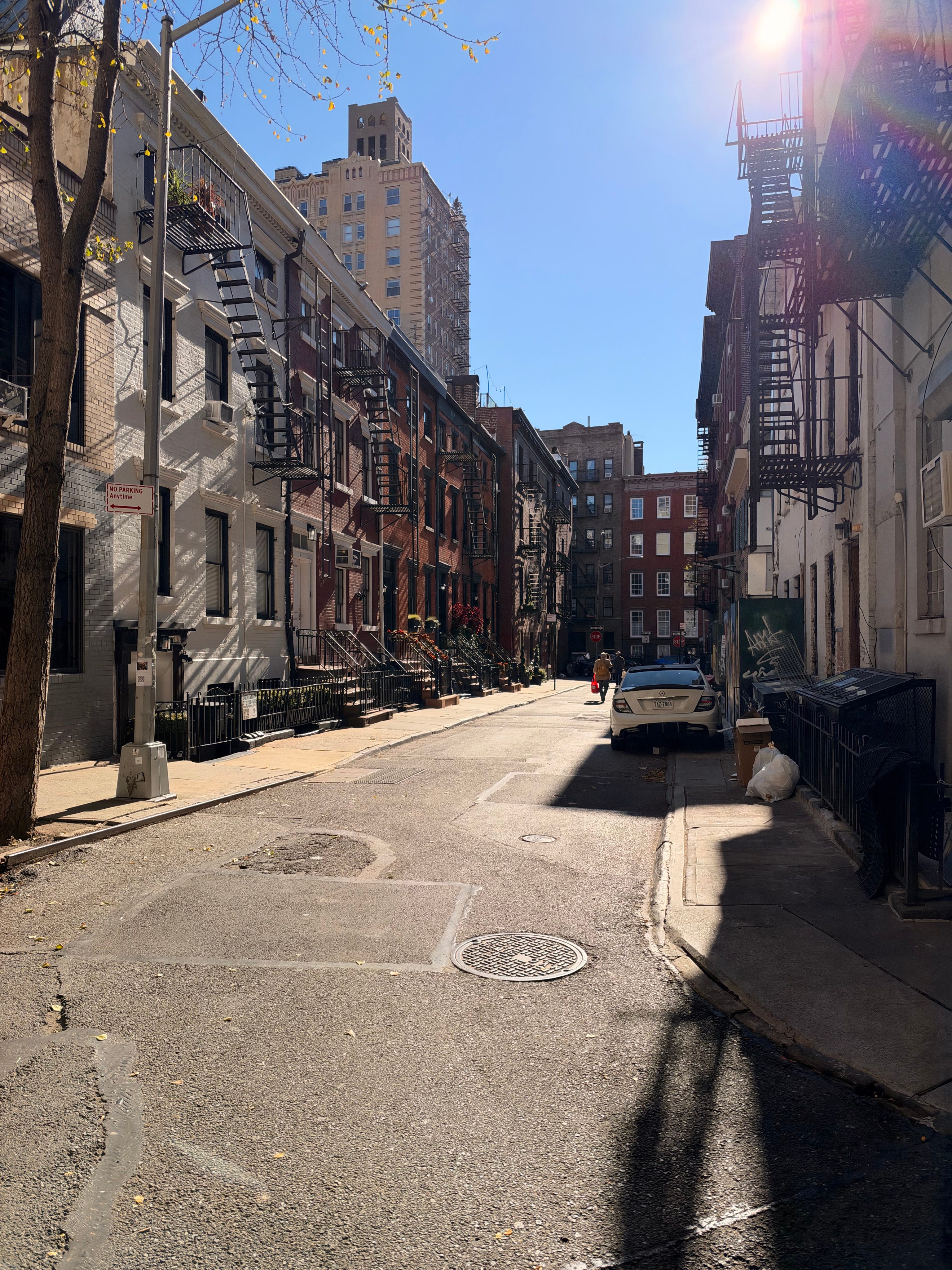
From Stonewall, Matt and I continued wandering through the West Village.
And I think I may have found one of my favorite neighborhoods in Manhattan.
What a charming place.
Unlike Midtown, where the streets follow a fairly predictable grid, the West Village seems to have been designed by someone who thought straight lines were terribly overrated.
The streets twist and turn, lined with beautiful old brownstones, leafy trees, little neighborhood restaurants, and shops tucked into buildings that look as though they’ve been there forever.
It’s the kind of neighborhood that makes you slow down.
Not because your feet hurt, although ours certainly had reason to complain, but because you want to look at everything.
Every block seems to have its own personality. Beautiful stoops, wrought-iron railings, tiny gardens, and those wonderful old brick buildings that give New York so much character.
And then we came upon a very familiar sight.
The apartment building from Friends!
There it was, at the corner of Bedford and Grove Streets, looking just as familiar as it did on television.
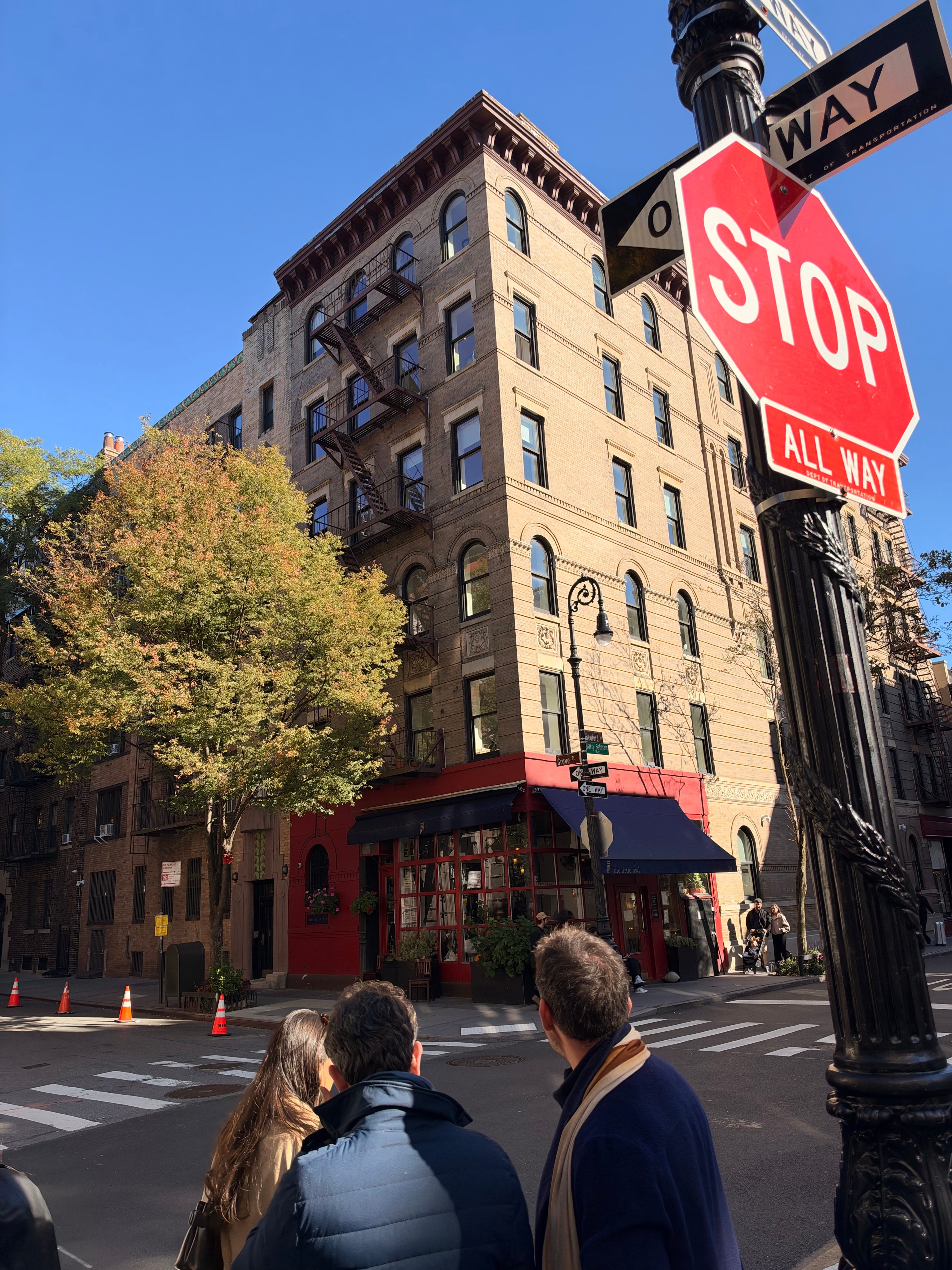
For anyone who spent years watching Monica, Rachel, Chandler, Joey, Ross, and Phoebe navigate life in New York, there’s something wonderfully nostalgic about standing in front of it.
I half expected Ross to come around the corner carrying a sofa, screaming, “PIVOT! PIVOT! PIVOOOOT!”
Which, frankly, is also a pretty accurate description of Matt and me trying to navigate the winding streets of Greenwich Village.
Although I suspect the actual residents have heard enough Friends references to last several lifetimes.
What surprised me most wasn’t the building itself, but how much I loved the neighborhood around it.
On television, that apartment building always seemed like the perfect New York setting. But walking those streets, I realized the surrounding neighborhood really is that charming.
You can almost imagine yourself living there.
A beautiful little apartment in an old brownstone. A neighborhood coffee shop. Tree-lined streets. Everything you need within a few blocks.
Naturally, in my fantasy, we can also afford the rent.
Because apparently, even my imagination has trouble explaining how anyone pays for an apartment in the West Village.
Still, of all the places we’ve wandered this week, this was one where I could genuinely picture myself living.
New York has a way of doing that.
One minute you’re visiting a famous television location.
The next, you’re mentally moving in.
Cobblestones, Chelsea Market, and Life Above the Streets
From the West Village, we continued toward the Meatpacking District.
This is another part of New York that has managed to reinvent itself without completely erasing its past.
The cobblestone streets and old industrial buildings are still there, but now they’re surrounded by restaurants, shops, and fashionable people who look considerably more put together than two tourists who’ve spent the better part of a week walking across Manhattan.
I do love the cobblestones.
They’re beautiful.
Although after several days of walking, I suspect Matt’s feet would have preferred something a little less historically authentic.
Our next stop was Chelsea Market.
The building was once part of the Nabisco factory complex where the Oreo was invented.
Which, as far as I’m concerned, makes it a historically significant American landmark.
Forget the Declaration of Independence.
Someone here helped give the world the Oreo.
Today, the old factory has been transformed into a bustling market filled with food vendors, shops, and all sorts of wonderful things to eat.
We wandered through, taking in the atmosphere and admiring the transformation.
There’s something particularly appealing about old industrial buildings finding new lives.
Rather than tearing everything down and starting over, New York has managed to turn places like this into something that still feels connected to the city’s history.
From Chelsea Market, we headed up onto the High Line.
Now, this is an ingenious idea.
An old elevated freight railway, once used to move goods through Manhattan’s industrial west side, has been transformed into a landscaped public park.
Instead of trains, there are walking paths, plants, benches, and people enjoying an entirely different view of the city.
You’re above the streets, winding between buildings, looking down at traffic and across at old warehouses, modern architecture, apartment windows, and glimpses of the Hudson River.
It’s a fascinating perspective.
And occasionally a rather intimate one.
There are places where you’re close enough to surrounding buildings that you feel as though you’re getting a peek into someone else’s New York life.
I suppose that’s one of the realities of living in a city where millions of people are packed onto a relatively small island.
Privacy is more of a suggestion than a guarantee.
Still, the High Line is wonderful.
And by this point, I’d come to appreciate something else about New York.
Its remarkable ability to keep reinventing itself.
Old factories become markets.
Abandoned railways become parks.
Historic neighborhoods find new purposes.
The city is constantly changing, but somehow it never completely loses the layers of history underneath.
America Underground
Here’s something I never expected to say.
I’ve fallen in love with the New York subway.
Now, having experienced Tokyo’s transit system, I can confidently say the Japanese have perfected the art of moving millions of people around a city.
Tokyo’s trains are clean, efficient, orderly, and so precise you could probably set your watch by them.
New York is an entirely different animal.
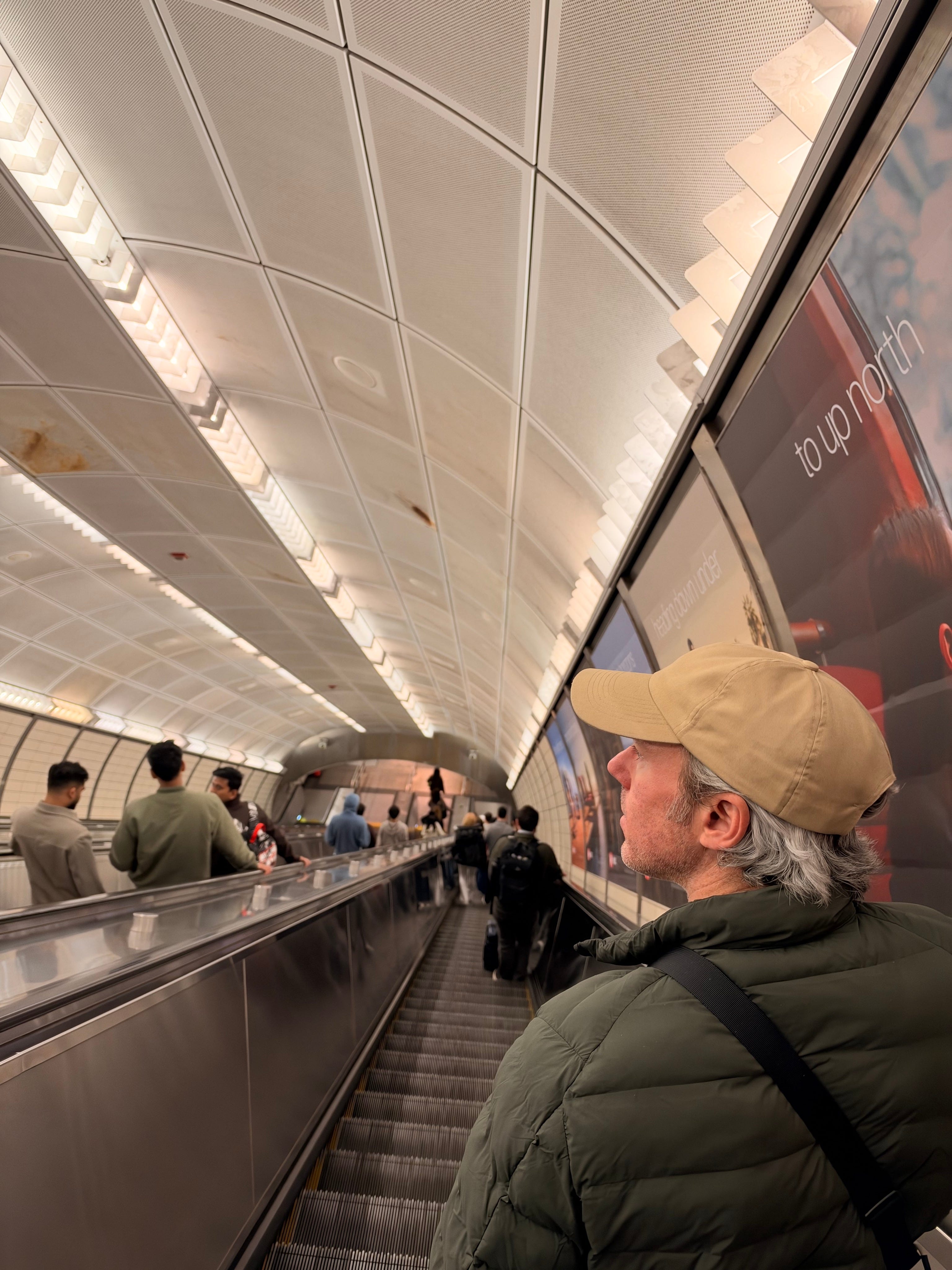
The stations are dark.
They’re dirty.
And there’s that unmistakable musty smell that greets you as you descend the stairs.
It’s the smell of a system that’s been there for generations, carrying millions of people through the daily business of life.
And strangely enough, I’ve grown to love it.
There’s something wonderfully authentic about the whole experience.
It doesn’t try to be beautiful.
It doesn’t apologize for its age.
It just keeps moving.
Before coming here, I’d heard all the warnings about the subway.
How confusing it is.
How dirty it is.
How scary it can be.
And yes, we’ve managed to get ourselves on the wrong side of a station and even board the wrong train.
But those were our mistakes, not the subway’s.
The truth is, I’ve found it remarkably easy to get around.
So far, I don’t think we’ve been anywhere that was more than a five-minute walk from a station.
For a city this enormous, that’s extraordinary.
And the more I ride it, the more I realize the New York subway is wonderfully, unmistakably American.
It’s messy. It’s loud. It’s complicated.
Nothing seems quite as straightforward as it ought to be.
We don’t do things the easy way in this country.
We argue.
We squabble.
We disagree about which direction we’re going, and occasionally we end up on the wrong train.
But somehow, eventually, we get where we need to go.
Tokyo has mastered efficiency.
New York has mastered the art of making a beautiful mess of things and still getting the job done.
And perhaps that’s why I’ve grown so fond of this old, dirty, musty subway.
It’s America underground.
A little chaotic, occasionally frustrating, full of characters, and somehow still moving forward.
Just mind the gap.
Fifty Years and Counting
By late afternoon, our friend Amos had arrived in New York.
And this is where Sunday’s story becomes about something considerably more important than catacombs, cobblestones, or public transportation.
Amos and I have been best friends since I was two years old.
He’s a year older than me, and in many ways, he’s always been more of a brother than a friend.
Fifty years.
Half a century.
We’ve quite literally grown up together.
From little boys discovering the world to teenagers trying to figure out our place in it, and eventually adults navigating all the wonderful, complicated, heartbreaking, and occasionally ridiculous things life throws at us.
He’s been there through it all.
There aren’t many people in your life who remember you before you really knew who you were.
People who knew your family, your childhood, the person you used to be, and every version of yourself that came afterward.
Amos is one of those people.
And somehow, here we were, all these years later, in New York City.
We made plans to meet him and Kim and Kim for dinner on the Upper East Side.
Now, the Kims have been part of my life for more than thirty years.
Amos has been there for fifty.
And Matt, of course, is the man I get to share my life with.
These aren’t simply people I enjoy spending time with.
They’re people who have helped shape the person I am.
People who know my history.
People who have seen me at my best and, undoubtedly, at moments when I was considerably less impressive.
And they’re still here.
Which either says something wonderful about our friendships or raises serious questions about their judgment.
Possibly both.
Five Friends and One Very Happy Husband
We ended up at The Drunken Munkey, a wonderfully atmospheric Indian restaurant on the Upper East Side.
And it was excellent.
Matt finally got his Indian food.
This was a significant development.
He’s been patiently accompanying me through museums, historic buildings, cemeteries, catacombs, and enough walking to qualify as a small military expedition.
The man deserved a good Indian dinner.
And he got one.
But the best part of the evening wasn’t the restaurant.
It wasn’t even the food.
It was looking around the table.
Kim and Kim.
Amos.
Matt.
And me.
Five people sitting together in New York City, connected by decades of friendship, love, and shared history.
Thirty years of friendship on one side of the table.
Fifty years on the other.
And enough stories between us to fill several books.
Some of which should probably never be published.
We talked, laughed, ate wonderful food, and enjoyed the simple pleasure of being together.
No museum reservations.
No theater curtain times.
No historic building we needed to rush off and photograph.
And, mercifully, no suggestion that we should walk another seven miles.
Just good food and the people I love.
I found myself thinking about how extraordinary that really is.
We spend so much of our lives making plans.
Places we want to visit.
Things we want to see.
Experiences we want to have.
And I’ve been doing plenty of that on this trip.
We’ve climbed to the crown of the Statue of Liberty, crossed the Brooklyn Bridge, explored extraordinary museums, wandered through historic neighborhoods, and experienced the magic of Broadway.
We’ve walked through cemeteries in the dark and descended into catacombs beneath an old cathedral.
We’ve ridden subways, eaten wonderful food, and put more miles on our feet than either of us probably thought advisable.
But you can’t buy fifty years of friendship.
You can’t book it in advance, find it in a guidebook, or put it on an itinerary.
You just have to be lucky enough to have it.
And I am.
Very lucky indeed.
The Best Things Aren’t Always on the Itinerary
Sunday started with us heading toward the wrong cathedral.
It took us underground into the history of old New York, through the winding streets of Greenwich Village, past landmarks of LGBTQ history, across the cobblestones of the Meatpacking District, and onto an old railway floating above Chelsea.
It reminded me why I love exploring cities.
The history.
The architecture.
The people.
The unexpected discoveries.
Even the dark, dirty subway stations that somehow manage to make me smile.
But the day ended with something even better.
A dinner table filled with some of my favorite people in the world.
Friends who’ve known me for thirty years.
A best friend who’s been my brother in all but blood for fifty.
And my husband, who’s been beside me through every adventure this week, even when his feet have been begging for mercy.
New York is an extraordinary city.
But tonight, it wasn’t the skyline, the landmarks, or the history that made me happiest.
It was the people sitting around that table.
Fifty years of friendship, a little New York magic, and a Sunday I wouldn’t trade for anything.
And the best part?
We’ve still got a little more New York to explore.Q